
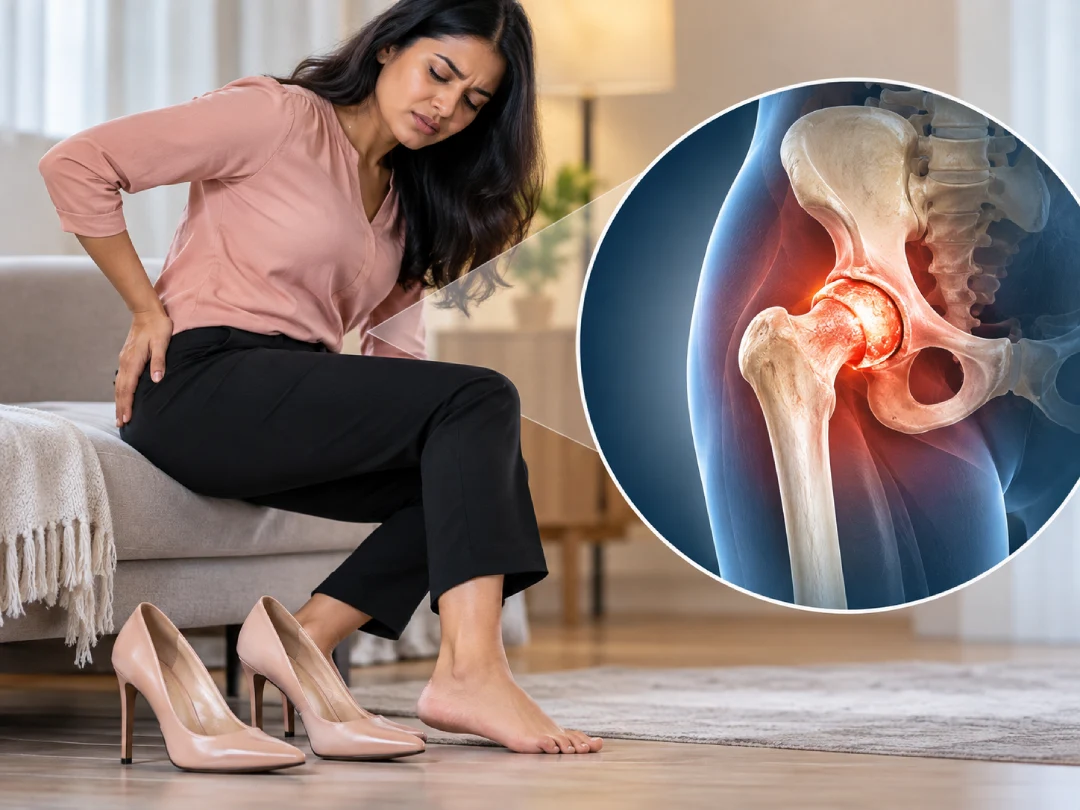
Yes, long-term high-heel use can change how the body distributes load while standing and walking. This may place greater stress on the hips, knees, ankles and lower back.
However, wearing heels does not automatically cause permanent hip damage. The effect depends on heel height, frequency of use, duration and individual joint health.
How High Heels Change the Way You Stand and Walk
High heels shift 70% to 80% of your body weight forward onto the balls of your feet, disrupting your natural posture and forcing your ankles, knees, and hips out of alignment.
The Shift in Pelvic Tilt and Spinal Alignment
Wearing high heels forces a chain reaction of structural changes throughout your core and spine:
- Forward Pelvic Tilt: The pelvis tips forward, pushing the centre of gravity out of its natural position.
- Lumbar Lordosis: The lower back arches excessively to compensate, putting intense pressure on lumbar vertebrae.
- Spinal Misalignment: The upper spine mirrors this curve, causing a backward lean that strains muscles up to the neck.
The Real Connection Between Heels and Hip Pain
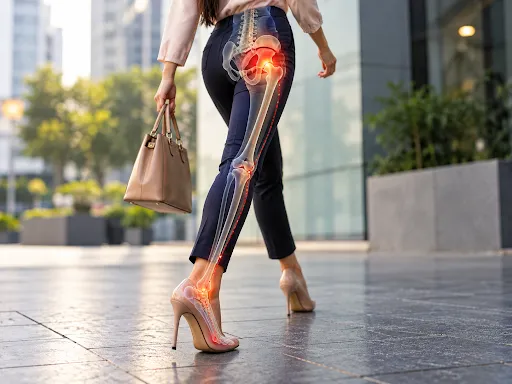
Heel use can contribute to hip discomfort when repeated changes in loading and movement add stress to muscles and joints. This is especially true when you wear heels frequently or for long periods.
How Altered Gait Puts Extra Load on the Hip Joint
Walking in high heels (HH) can reduce the ankle's ability to move naturally and change stride mechanics. [Source].
The hip muscles may then work differently to maintain balance and forward movement.
Over time, repeated mechanical stress may contribute to discomfort, particularly in people with existing joint problems or reduced muscle strength.
Can Years of Wearing-Heels Lead to Long-Term Joint Damage?
Regularly using high heels does not mean that permanent joint damage will occur. However, repeated changes in loading and movement can contribute to pain, stiffness and increased stress on joints, particularly with higher heels and prolonged use. Existing joint problems may make these effects more noticeable.
Cartilage Wear and Early Osteoarthritis Risk
Osteoarthritis develops through multiple factors, including age, previous injury, genetics, body weight and joint mechanics. High heel use may alter forces across the lower-limb joints, but it is not considered a sole cause of osteoarthritis.
Long-term use may be more relevant when combined with other risk factors. Assess persistent pain, stiffness, or reduced movement rather than attributing it only to footwear. If osteoarthritis affects mobility or causes persistent symptoms, consider appropriate arthritis treatment from a trusted orthopaedic doctor.
Who Is More Vulnerable — Frequency, Height and Duration Matter
The mechanical effect generally increases as heels become higher and are worn more frequently or for longer periods.
| Factor | Possible effect |
| Higher heels | Greater alteration in lower-limb mechanics |
| Frequent use | More repeated exposure to altered loading |
| Long periods of wear | Greater muscle and joint fatigue |
| Existing joint problems | Symptoms may become more noticeable |
Individual response varies. Someone who wears heels occasionally may experience little or no lasting problem, while prolonged use may be less comfortable for someone with an existing musculoskeletal condition.
Other Joints Affected Alongside the Hip
The effects of altered footwear are not limited to one joint. Changes in walking mechanics can influence several connected areas of the lower limb.
Knees, Lower Back and Ankles in the Chain Reaction
High heels can increase the demand placed on the ankles and change loading around the knees. The lower back may also adjust to changes in pelvic position.
This does not mean that wearing heels will inevitably cause injury. It means that repeated use can change how forces are distributed through the lower limb.
People who develop persistent pain, swelling, stiffness, or difficulty walking should consider an orthopaedic assessment, as this may sometimes be due to a knee ligament injury. So do not continue to tolerate symptoms.
Recognising Early Warning Signs
Early symptoms can indicate that the hips or other joints are not tolerating repeated mechanical stress well. Don't dismiss recurring pain as ordinary fatigue, especially if it affects walking or daily activities.
Symptoms That Shouldn't Be Ignored
- Hip pain that repeatedly occurs after wearing heels
- Stiffness after sitting or standing
- Pain when walking, climbing stairs or getting up from a chair
- Reduced hip movement
- Limping or changes in walking pattern
- Swelling or tenderness around a joint
- Pain that continues even after removing the footwear
Smarter Footwear Habits Going Forward

Reducing prolonged exposure to high heels can decrease repeated stress on the lower limbs. Comfortable footwear can also make walking and standing easier, particularly during long periods of activity.
No single heel height can guarantee protection from joint problems. A practical approach is to choose a lower, stable heel for regular use and reserve higher heels for shorter periods when possible.
Alternating Footwear and Strengthening Hip Muscles
Consider supportive shoes for commuting, walking and extended standing.
Strengthening the muscles around the hips and legs can also support joint function and stability. Useful exercises may include:
- Gluteal strengthening
- Hip abductor exercises
- Controlled squats, when appropriate
- Core strengthening
- Balance exercises
Adjust exercises if you have pain. People with persistent symptoms or known joint problems should seek professional advice before starting a new strengthening programme.
FAQs
How many years of regular high heel use can start affecting the hip joint?
There is no specific timeframe. Frequent use can cause repeated biomechanical changes, while discomfort or lasting problems vary with frequency, duration, shoe design, and individual musculoskeletal health.
Is occasional heel-wearing as risky as wearing them daily?
No. Less frequent use generally means fewer repeated loading changes. Risk can still vary with shoe height, wearing duration, walking demands and underlying musculoskeletal problems.
Can switching to flats reverse existing hip joint strain?
Yes, reducing elevated footwear can decrease associated mechanical loading and may ease symptoms when shoes contribute. However, established structural changes may require additional management and cannot always be reversed through footwear changes alone.
What heel height is considered safer for long-term wear?
No single measurement guarantees safety. Lower, broader, and stable designs generally cause less change in lower-limb mechanics than taller, narrower styles, particularly during extended standing or walking.
What symptoms indicate heel-related hip damage rather than general fatigue?
Persistent discomfort, stiffness, restricted movement, limping, or symptoms that continue after removing footwear warrant evaluation. These features may have several causes, so they cannot confirm footwear-related joint damage on their own.
Final Takeaway — When to Consult an Orthopaedic Specialist
Consult an orthopaedic doctor when:
- Hip pain keeps returning
- Symptoms interfere with walking or daily activities
- Movement becomes restricted
- Pain persists despite changing footwear and resting
- There is swelling, significant stiffness or a noticeable change in gait
An examination can help determine whether footwear is contributing to the symptoms or whether another hip, knee, ankle or lower-back condition needs attention. In advanced-stage cases where the hip joint requires surgical replacement, total hip replacement may be considered.
If a fall associated with poor balance results in a hip injury, you may require hip fracture treatment, upon necessity.
For further evaluation, contact us.